
'The number of airport bundles that may be awarded to a single bidder would be capped.'

The government has approved 20 new highway and housing projects at a total investment of Rs 14,538 crore (Rs 145.38 billion).

The cost of any flight from Delhi and Mumbai could rise by up to Rs 3,000 soon unless the airport regulator is able to reverse a court order.

The national highways selected for upgrade include -- Gurgaon-Jaipur, Surat-Dahisar, Chilkaluripet-Vijaywada and Panipat-Jalandhar. These four stretches together measure about 838 km.

The move is part of a larger initiative by the government to speed up work in the highway sector.
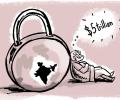
In order to achieve $5 trillion GDP by FY'25, India needs to spend about $1.4 trillion over this period on infrastructure, according to the Economic Survey. During financial years 2008-17, India pumped in about $1.1 trillion on infrastructure. However, the challenge is to step up infrastructure investment substantially, the Economic Survey 2021-22 said.

The estimated cost of the project is around Rs 1,642 crore.

The Centre's ambitious Rs 6-trillion National Monetisation Pipeline (NMP) could fall short of yearly targets for the current fiscal year (FY22) and the next one as well (FY23), partly due to the long gestation period in monetising big-ticket railway infrastructure, Business Standard has learnt from sources in the finance and rail ministries. Officials say the major chunk of railway monetisation will happen from FY24 onwards because leasing some of the infrastructure, like stadiums and dedicated freight corridor, will not happen anytime soon. Rail infra is expected to be the second-biggest contributor to the NMP, with about Rs 1.52 trillion worth of assets to be monetised.

A host of factors including the reform measures taken by the government and decline in global oil and commodity prices have led to lower inflation, the Finance Ministry said on Wednesday.

Banks might not have realised the exact implication of risky projects under PPP projects, which were getting implemented under high leverage

Terming investment in infrastructure "quintessential" to boost growth, the Economic Survey on Friday said post unlocking of the economy, infra sectors are poised for growth and construction of roads is expected to return to the high pace attained before COVID-19. The infrastructure sector will be the key to overall economic growth and macroeconomic stability, the Survey said emphasising that the year after the crisis (2021-22) will require sustained and calibrated measures to facilitate the process of economic recovery and enable the economy to get back on its long-term growth trajectory. "Basic infrastructure facilities in the country provide the foundation of growth. In the absence of adequate infrastructure, the economy operates at a suboptimal level and remains distant from its potential and frontier growth trajectory.

The top court said a balanced approach of sustainable development ensuring environmental safeguards needs to be resorted to while dealing with the issue of sand mining.

Of the three major Budget announcements related to the banking sector, privatisation of PSBs is the most audacious, says Tamal Bandyopadhyay.

The companies are crying foul over the cancellation of 25 blocks held by 68 firms over the past two days.

BMS, BKS and SJM are trying to forge common cause with outfits on the other side of the ideological divide over the government's policies they are not in agreement with.

The Cabinet Committee on Economic Affairs (CCEA) on Wednesday approved a five-year-long reform-based result-linked power distribution scheme worth Rs 3.03 lakh crore, for strengthening system of utilities to improve efficiency. Briefing after the CCEA meet here, Power and New & Renewable Energy Minister R K Singh said, "We have done a lot for power distribution reforms. It needs to be strengthened. Today, the Cabinet has approved the new scheme worth Rs 3.03 lakh crore, including Rs 97,000 crore central outlay." He said the funds would be given to power distribution companies (discoms) to strengthen their system.
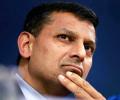
The Governor had submitted his report to the Public Accounts Committee and put the blame on 'overall economic downturn'

Advice to the new finance minister from former RBI governor Raghuram Rajan: 1. Clean up banks by reviving projects that can be revived after restructuring debt. 2. Improve governance and management at public sector banks. 3. De-risk banking by encouraging risk transfers to non-banks and the market. 4. Reduce the number and weight of government mandates for public sector banks, and for banks more generally.

'On the tax front, most of the Budget proposals are sensible'.
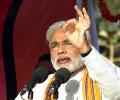
'Both reflect prejudice and short-sightedness peculiar to Mr Modi's way of thinking.'
